
Tired of bulky air conditioners with ugly outdoor units? 😩
There is a growing trend of “no outdoor unit” air conditioners — but are they actually good or just marketing?
Traditionally, air conditioning systems have been linked with the cumbersome external compressors affixed to building exteriors. However, an increasingly popular category of ductless and self-contained air conditioning units is revolutionizing this perception. Such modern systems are optimally engineered to function within a room's boundaries, which makes them exceptionally fitting for apartments, heritage buildings, or areas where structural changes are either restricted or undesirable.
Understanding Single Units With Ducted Exhaust
A portable, self-contained air conditioner, frequently referred to as a portable or monoblock unit, encases all its operational components within a single unit that remains indoors. Contrary to systems with an external compressor, these units deploy a flexible exhaust hose to expel warm air through a window, a wall duct, or a ceiling vent. This attribute greatly simplifies installation when compared to split systems. Typically, the hose is installed using a window kit or a minor wall opening, requiring no permanent alterations to the structure. These units are compact and mobile, allowing them to be relocated to different rooms as needed, an advantage not offered by fixed systems.
Advancements in this technology include dual-hose models, which introduce external air for intake and independently expel warmth through a separate outlet. This configuration increases efficiency compared to single-hose models as it minimizes the negative pressure effect caused when more air is expelled than introduced.
Combining Cooling and Heating Functions
Present-day unitless air conditioners often come as multi-functional systems. While cooling remains their primary role, many units are equipped with heat pump modes, enabling them to heat a room during colder periods. This dual functionality enhances their appeal as a year-round investment, moving beyond a mere seasonal utility.
Additionally, some models offer dehumidification and fan-only modes, increasing their practicality, particularly in humid climates or during changing seasons. When selecting a unit, consumers should pay close attention to the energy efficiency rating, generally indicated as EER or CEER for portable models. A higher efficiency rating translates to lower electricity consumption for the same cooling performance, significantly impacting operational costs throughout the summer months.
Despite their versatility, portable monoblock units typically have lower cooling capacities than comparably sized split systems. Therefore, they are ideally suited for single-room or open-plan areas with limited square footage and should not be expected to cool an entire house on their own.
Considerations for Pricing and Installation
A significant benefit of opting for unitless air conditioners lies in their reduced installation expenses. Unlike traditional split systems, which necessitate professional installation, including setting up the outdoor unit, running refrigerant lines, and connecting electrical systems — processes that accrue substantial labor costs besides the equipment itself — portable units generally do not require professional setup. Most units are ready to operate straight out of the box, needing just access to a power supply and an opening for the exhaust system.
Nevertheless, the purchase prices can significantly fluctuate based on the unit's capacity, brand, and features. Below is a succinct breakdown of typical pricing brackets across the most common unitless air conditioning categories.
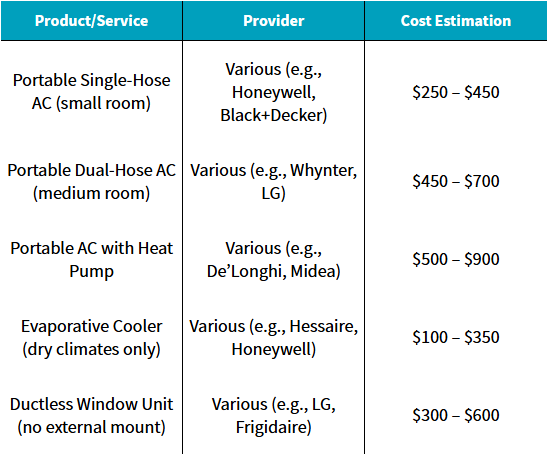
Prices, rates, or cost estimates mentioned in this article are based on the latest available information but may change over time. Independent research is advised before making financial decisions.
Essential Considerations Before Purchasing
Prior to investing in a unitless air conditioning system, evaluating the size of the room and the quality of insulation is important. Manufacturers usually recommend room sizes in square feet or meters, providing a helpful guideline. However, rooms with expansive windows, insufficient insulation, or extensive sun exposure might necessitate a unit with greater capacity than initially suggested.
Noise level is another critical factor. Due to the placement of the compressor within the room, portable units generally produce more noise than split systems. For units intended for bedrooms or home offices, reviewing the decibel levels in the product details is recommended.
Finally, scrutinize the exhaust hose setup. Ensuring windows are sealed correctly prevents outdoor warm air from intruding, directly influencing efficiency. Some users opt for custom window panels or door venting kits to achieve a more airtight seal, especially for older window frames.
In conclusion, unitless air conditioners offer a viable and convenient solution for individuals unable or unwilling to integrate traditional split systems. With an expanding selection of options that amalgamate cooling and heating in a versatile portable format, they provide substantial value for diverse living conditions — from urban apartments to temporary office arrangements and numerous settings in between.